Calorie counting isn't the right tool for this stage of life. What changes most after 40 is your relationship to two specific nutrients: protein and fiber. A European expert consensus (ESCEO) recommends 1.0–1.2g of protein per kilogram of body weight per day for postmenopausal women, with at least 20–25g at each main meal, to help protect against the muscle loss that becomes more likely after menopause. Fiber matters just as much for metabolic health. Neither of these has anything to do with the number on the scale — and that distinction changes what's worth tracking.
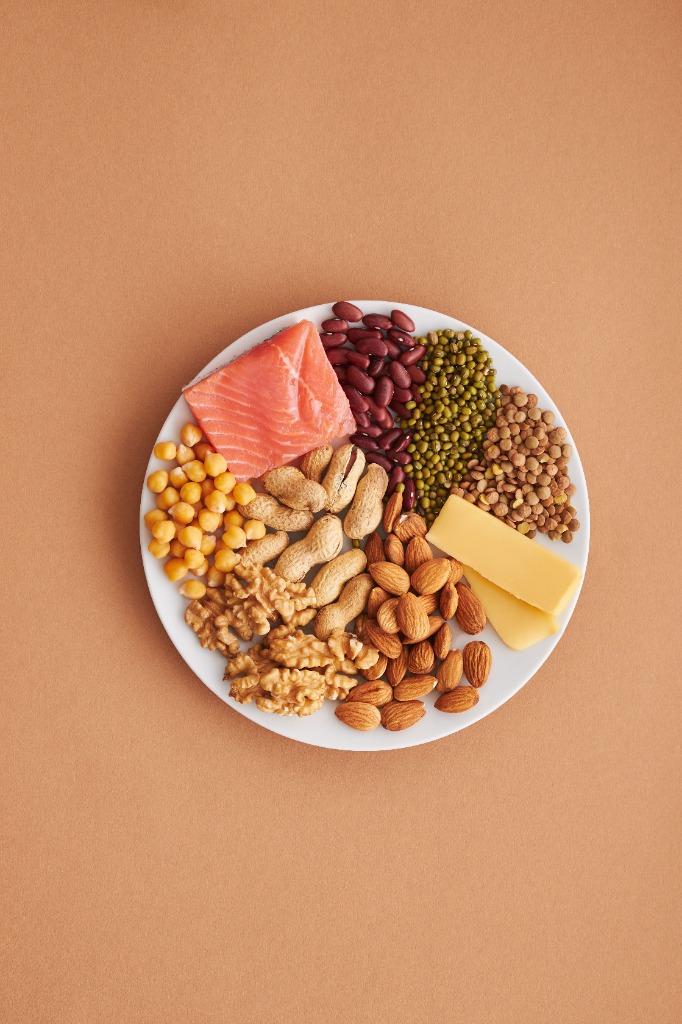 Image source: www.pexels.com
This article asks one question: why protein and fiber, rather than calories, are the numbers worth tracking after 40. For how much protein you need and how to spread it across the day, see our full guide, Protein After 40.
The number that actually matters now: protein
A European expert consensus (ESCEO) recommends that postmenopausal women aim for 1.0 to 1.2 grams of protein per kilogram of body weight daily, with at least 20 to 25 grams per main meal, to help counteract age-related muscle loss (sarcopenia).
If you've counted calories for years, the logic is simple: calories in, calories out.
In your forties, that math can stop adding up: same calorie intake, same workouts, a different body. Feeling softer in a way that has nothing to do with the scale, or losing strength without changing your training, can easily trigger the usual self-blame script — eating too much, moving too little.
That doesn't have to mean you're doing something wrong. It may mean you're asking the wrong question.
Here's the number that changes the question. Clinical guidance for postmenopausal women — specifically from the European Society for Clinical and Economic Aspects of Osteoporosis and Osteoarthritis — recommends a daily protein intake of 1.0 to 1.2 grams per kilogram of body weight, with at least 20 to 25 grams of high-quality protein at each main meal. That's notably higher than the standard adult guideline of roughly 0.8g/kg, and the reason isn't vanity — it's sarcopenia, the progressive, age-related loss of muscle mass and strength.
A large study of women aged 45–70 found that adequate protein intake, combined with regular resistance exercise, was associated with stronger grip strength and lower odds of muscle weakness — with exercise showing the stronger link. Muscle mass tends to fall across the menopause transition, although researchers are still working out how much of that is down to hormones and how much to age — which is why the protein habits that served you at 30 may be worth revisiting at 45.
A protein target can sound easy to hit until you actually track it for a week. For postmenopausal women, the ESCEO recommends 1.0–1.2g of protein per kilogram of body weight a day, which is roughly 60–84g at 60–70kg (more in Protein After 40). Without writing down what you eat, it's hard to know how close you actually get.
The number nobody talks about: fiber
Fiber supports metabolic health in menopause: EFSA considers 25 grams a day adequate for adults (the NHS recommends 30 grams), and fiber helps regulate blood sugar, especially when carbohydrates are eaten together with protein and healthy fats.
Protein gets the spotlight. Fiber barely gets mentioned, and that's a mistake. A 25–30g/day fiber target is reasonable and achievable, and it does something calorie counting doesn't address: eating plenty of fiber is linked to a lower risk of type 2 diabetes and heart disease, whatever the scale says.
In practice, this means thinking less about cutting food and more about adding it — vegetables, legumes, whole grains, the kind of slow-digesting carbohydrates that also help stabilize blood sugar rather than spiking it. Pairing carbohydrates with protein or healthy fats — rather than eating them alone — slows the absorption of carbohydrates and can help soften the sharp blood sugar swings.
Calcium and vitamin D: why do they matter more in menopause?
Calcium and vitamin D matter more during the menopause transition, because falling estrogen speeds up the loss of calcium and other minerals from bone.
Both are tied to maintaining bone strength as the protective effect of estrogen on bone fades — and how much you need, and whether a supplement makes sense for you, is worth asking your doctor or pharmacist. That's not a cue to obsess over supplements; it's a cue to look at what's on your plate before assuming a multivitamin will cover the gap.
How can you build meals around protein and fiber?
Instead of starting from a calorie total, start each meal with a protein source, then add vegetables, legumes or whole grains around it.
In practice, that can look like this. Eggs and Greek yogurt for breakfast instead of just toast. A handful of legumes or quinoa with lunch instead of treating carbohydrates as the whole plate. A palm-sized protein portion at dinner, even on the nights when you'd rather just have pasta and call it a day.
It's not dramatic. It's not a 16:8 fasting protocol, either — studies of intermittent fasting in menopausal women are still scarce. It's just paying attention to two numbers that actually matter for this decade of life, instead of one number that mattered for the last one.
Calorie counting is built around limiting food. Counting protein and fiber is about building a plate that works for the body you have now — not the one you had at 28. That shift matters more than any specific number.
Protein needs vary: when should you talk to your doctor?
Individual protein needs genuinely do vary, and that matters more than any blog post. If you have a condition like kidney disease or another medical reason to manage protein intake carefully, talk to your doctor: this article isn't a substitute for that conversation.
Frequently asked questions
How much protein do I need after 40?
A European expert consensus (ESCEO) recommends 1.0 to 1.2 grams of protein per kilogram of body weight per day for postmenopausal women to help protect muscle mass.
Why is protein more important during menopause?
Muscle mass tends to decline with age and across the menopause transition. Enough protein, combined with regular strength training, helps preserve muscle and strength.
How much fiber should I eat daily?
EFSA considers 25 grams a day adequate for adults and the NHS recommends 30 grams; fiber helps regulate blood sugar and is linked to better metabolic health.
Can I get enough protein on a plant-based diet?
Yes. Legumes, lentils, tofu, quinoa, and nuts are good plant-based sources of protein and fiber, and eating a variety of them across the day covers your needs best.
Should I count calories during menopause?
Instead of calorie restriction, focusing on nutrient-rich foods like protein and fiber, together with regular exercise, is a better way to look after your muscle and metabolism.
Read next:
Last updated: October 12, 2026
Health Note: This article reflects current clinical and research literature, including ESCEO guidance and peer-reviewed nutrition research on postmenopausal protein intake, listed under References below. It is not medical or nutritional advice and does not replace individualized guidance from a doctor or registered dietitian.
References
- Rizzoli R, et al. The role of dietary protein and vitamin D in maintaining musculoskeletal health in postmenopausal women: a consensus statement from the European Society for Clinical and Economic Aspects of Osteoporosis and Osteoarthritis (ESCEO). Maturitas. 2014. esceo.org
- Deutz NEP, et al. Protein intake and exercise for optimal muscle function with aging: Recommendations from the ESPEN Expert Group. Clinical Nutrition. 2014. pmc.ncbi.nlm.nih.gov
- Baek JK, et al. Combined associations of protein intake and resistance exercise with handgrip strength in postmenopausal women. Maturitas. 2026. pubmed.ncbi.nlm.nih.gov
- Menzies C, et al. Menopause, Female Sex Hormones, Skeletal Muscle Mass and Muscle Protein Turnover in Humans. Journal of Cachexia, Sarcopenia and Muscle. 2026. pmc.ncbi.nlm.nih.gov
- EFSA. EFSA sets European dietary reference values for nutrient intakes. 2010. efsa.europa.eu
- NHS. How to get more fibre into your diet. nhs.uk
- Diabetes UK. Glycaemic index and diabetes. diabetes.org.uk
- British Dietetic Association. Eating well for the perimenopause and menopause (Food Fact Sheet). 2025. bda.uk.com
- NHS. Vitamin D. nhs.uk
- Garg R, et al. Intermittent Fasting and Weight Management at Menopause. Journal of Mid-life Health. 2025. pmc.ncbi.nlm.nih.gov