Cortisol is the body’s main stress hormone, and you need it every day. It does not cause menopause, and symptoms alone cannot tell you whether your cortisol is high. But stress, broken sleep and the hormone changes of perimenopause can feed into each other, so night waking, anxiety, cravings and tiredness may feel harder to handle. Noticing your own patterns can help, and if symptoms are strong, lasting or new, it is worth talking to your doctor.
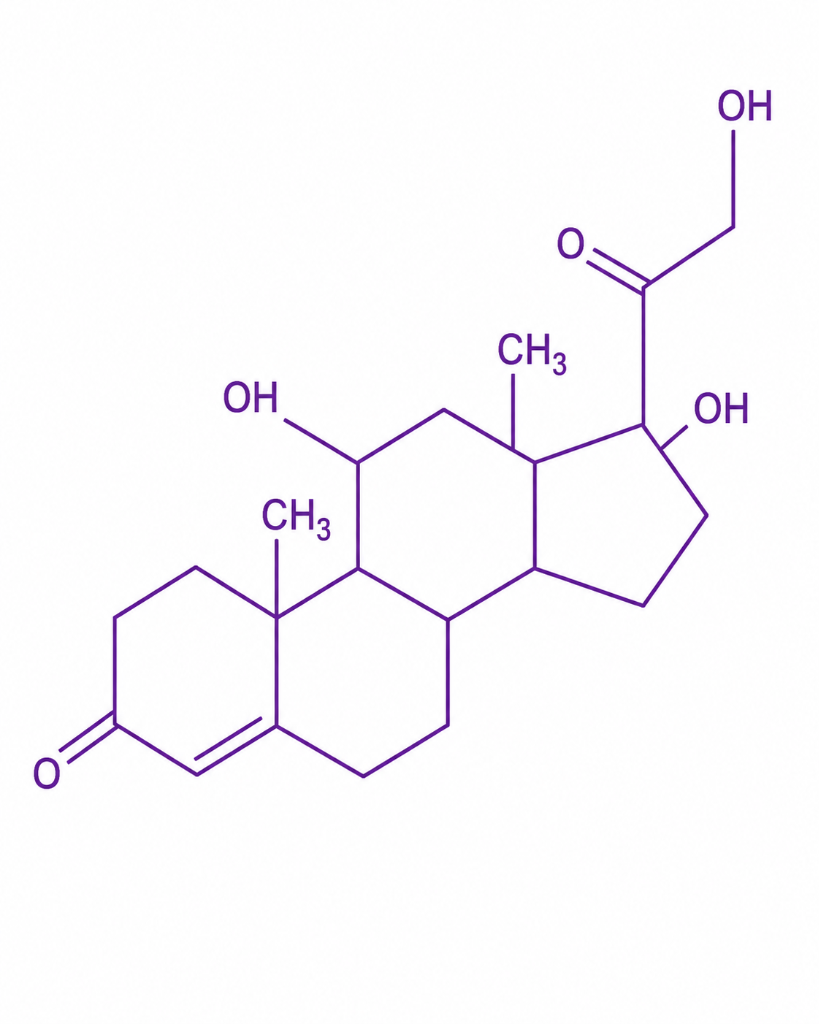
This article looks at one question: how does cortisol, the body’s main stress hormone, fit into perimenopause and menopause, and why can stress seem to hit harder in these years? You may know the feeling.
You wake up at 3:17 a.m. for no obvious reason. The room is quiet. Everyone else is asleep. Your body, however, seems to have opened a very unnecessary emergency meeting.
Your heart is a little faster than usual. Your mind starts reviewing tomorrow’s tasks, yesterday’s mistakes, the email you forgot to answer, the laundry, your mother’s appointment, your child’s school issue, your work deadline, and whether you should really be this tired after doing “nothing unusual.”
Then morning comes. You are exhausted, but strangely alert. You make coffee. Maybe another one. By late afternoon you want something sweet, salty, crunchy, or preferably all three. By evening, you are too tired to exercise, too tense to relax, and too awake to fall asleep easily.
It can feel like your body is working against you. But often, your body is not being dramatic. It is responding.
During perimenopause and menopause, the hormonal background changes, sleep may become lighter, and hot flashes or night sweats may appear. In the middle of all this sits cortisol: not the villain, not the whole explanation, but one part of the story. So let’s talk about it calmly. Not as another thing to fear, and not as another reason to blame yourself.
What Is Cortisol, and Why Does Your Body Need It?
Cortisol is a hormone made by your adrenal glands. It helps your body respond to stress, use sugar for energy, keep inflammation in check, regulate blood pressure and follow its sleep-wake rhythm. You need cortisol to function well.
The adrenal glands sit on top of your kidneys. They are small, but they are not lazy. Cleveland Clinic describes cortisol as an essential hormone that affects almost every organ and tissue in your body, and lists its roles: regulating how your body uses glucose (sugar) for energy, decreasing inflammation, regulating blood pressure and helping control your sleep-wake cycle.
Your brain and adrenal glands work as a team here. Two areas of the brain, the hypothalamus and the pituitary gland, send the signals that tell the adrenal glands to make cortisol. During stress, cortisol helps you stay on high alert and triggers the release of sugar from your liver, so you have fast energy available.
Cortisol also follows a daily curve. Most people have lower levels in the evening, when they go to sleep, and peak levels in the morning, just before they wake up. That is one reason it is so closely tied to your body clock.
So cortisol is not something to get rid of. It is meant to rise when needed, then come back down.
The difficulty is that many women over 40 are carrying work, children, aging parents, relationships, finances, body changes and the invisible mental load of being the person who remembers everything. Then perimenopause arrives and quietly changes the rules. The same life may suddenly feel heavier. Not because you became weaker, but because a lot is changing at once.
What Happens to Cortisol During the Menopause Transition?
Research suggests cortisol levels can rise in some women during the later stage of the menopause transition, but not in everyone, and the picture is not simple. Cortisol does not cause menopause, and it is only one of many things that can shape how the transition feels.
Menopause itself happens because of a fall in hormone levels. The NHS defines it as not having a period for 12 months, and notes that it usually affects women between the ages of 45 and 55, although it can happen earlier. Cortisol does not cause that transition.
What about cortisol levels themselves? Earlier research found that cortisol rises in some women during the late stage of the transition. A US study that followed midlife women for years and measured their overnight cortisol found that levels were linked mainly to other hormone changes, while symptoms, perceived stress and life circumstances showed little relationship to them once those hormones were taken into account.
That is a useful reminder. Cortisol is part of the picture, but it is easy to give it too much credit. The rest of this article looks at where stress, sleep and hormones can meet, without pretending that every symptom is “a cortisol problem.”
Can Stress Make Menopause Symptoms Feel Worse?
Stress does not cause menopause, but it can make some symptoms harder to live with. Hot flashes, sleep problems, anxiety and low mood can feed into each other, and stress can sit right in the middle of that loop.
Think of perimenopause like a room where several conversations are happening at once. Your periods are changing. Sleep may be disrupted. Hot flashes may come and go. Your mood may shift. Now add long-term stress. It does not create the whole room, but it can turn up the volume.
The symptoms themselves can already feel stress-like. The NHS describes hot flushes as something that can make you sweat a lot, cause palpitations or anxiety, or make you feel dizzy, and says that not being able to get to sleep or stay asleep can make you feel irritable, stressed and anxious. Mood swings, low mood, and problems with memory or concentration are also listed, and may feel worse if you have sleep problems and feel very tired.
Many women describe this as feeling “wired but tired.” That phrase is not a medical diagnosis, but it captures the experience well. Your body is exhausted, but you still cannot switch off.
This can also affect how you see yourself. You may think: “I am losing control.” “I have no discipline.” “I used to handle everything better.” But symptoms are not character flaws. If your sleep is broken, your hormones are shifting and your stress load is high, of course you may feel different. This is biology, not a personal failure.
That does not mean you can fix everything with a bubble bath and positive thinking. Please no. Women over 40 do not need another person telling them to “just relax” while they are holding an entire household, job and nervous system together. It does mean that practical, steady changes, and the right medical support when you need it, are worth looking at.
Why Do Stress and Menopause Affect Sleep So Strongly?
Sleep problems become more common during the menopause transition, especially difficulty staying asleep, and hot flashes and night sweats are a key part of this. Stress, alcohol, late caffeine and an irregular routine can make broken sleep worse.
Sleep is often one of the first things women notice changing. Sometimes you fall asleep normally but wake around 3 or 4 a.m. Sometimes you wake hot, damp or anxious. Sometimes nothing dramatic happens at all, and you simply sleep more lightly and wake feeling unrefreshed.
A review of sleep in the menopause transition found that this stage is associated with more insomnia symptoms, especially difficulty staying asleep, and that hot flashes and night sweats are a key part of the disruption. If a night sweat wakes you, your mind can switch on, and falling back asleep becomes harder.
Cortisol and sleep also influence each other. Cleveland Clinic notes that chronic sleep issues, like insomnia or working a night shift, can cause higher cortisol levels. In other words, poor sleep is not only a result of stress. It can add to it.
Everyday habits play a part too. The NHS explains that caffeine can disrupt your usual sleep rhythms and that its effects can last up to 7 hours, and that although a couple of glasses of wine may help you fall asleep, you sleep less deeply after drinking alcohol.
This does not mean every 3 a.m. waking is caused by cortisol. If night waking is your main problem, we look at it more closely in our article on waking at 3 a.m. during perimenopause and menopause. A practical question is not only “How many hours did I sleep?” It is also:
- When did I wake?
- Was I hot, anxious, hungry or alert?
- Did I drink alcohol?
- Did I have caffeine after midday?
- Was the day unusually stressful?
- Was I close to my period?
- Did I have hot flashes or night sweats?
- Did I wake with a racing heart?
These patterns are worth noticing because they can guide better decisions. Not perfect decisions. Better ones.
How Can Stress Affect Anxiety and Feeling “Not Like Yourself”?
Cortisol is part of the body’s alert system, and perimenopause can bring anxiety, mood swings and low mood of its own. Together, stress can feel more physical, more sudden and harder to calm. Strong or lasting anxiety deserves medical support.
One of the most unsettling perimenopause symptoms is anxiety that seems to arrive without permission. Nothing terrible has happened, and yet your body behaves as if something has. Your heart beats faster. Your chest feels tight. You may suddenly dislike noise, crowds, multitasking, or being asked one more question when you are already doing five things.
This can be frightening, especially for women who have always thought of themselves as calm or capable.
The NHS notes that symptoms can change over time: you may get hot flushes and night sweats for a while, and then they may improve and be replaced by others, such as low mood and anxiety. Poor sleep lowers your resilience on top of that.
Other conditions can feel similar. The NHS lists nervousness, anxiety and irritability, difficulty sleeping, sensitivity to heat and a fast or irregular heartbeat among the possible symptoms of an overactive thyroid, which is one reason persistent symptoms should be checked by a doctor rather than self-diagnosed.
So the goal is not to decide on your own what is causing your anxiety. The goal is to notice patterns and bring them to someone who can help. We go deeper into this in our article on perimenopause and anxiety.
There is also a gentler truth here. Many women have carried stress for years and learned to function through exhaustion. Perimenopause often removes the illusion that you can keep running on empty forever. That can feel inconvenient. It can also be useful information.
Can Cortisol Contribute to Belly Weight Gain During Menopause?
Weight gain around the stomach is common in perimenopause and menopause, and research links the transition itself to faster fat gain and loss of lean mass. Very high cortisol from a medical condition can cause belly weight gain, but everyday stress is only one possible piece of a bigger picture.
Let’s say something clearly: menopause weight gain is not simply a “willpower problem.”
The NHS says weight gain during perimenopause and menopause is common and often happens around the stomach and upper body. So when women say, “I feel like my belly appeared overnight,” they are not imagining the shift.
A large study that followed women through the transition found that, at the start of the menopause transition, the rate of fat gain doubled and lean mass began to decline, and these changes continued until about two years after the final period. Interestingly, overall weight did not climb faster, which means body composition can change even when the scales barely move.
Where does cortisol fit? Very high cortisol over a long time is a different matter from everyday stress. The NHS describes Cushing’s syndrome as a rare condition caused by having too much cortisol in your body, most often from taking high doses of steroid medicine for a long time, with symptoms that include more body fat on the neck, upper back, chest and tummy. Ordinary stress is not the same thing, and its role in midlife weight is less clear-cut. It can still matter indirectly, through broken sleep, tiredness, cravings and less time to move.
And then, very unfairly, you are told to “just eat less and move more.” That advice is not entirely wrong, but it is incomplete. If you skip breakfast, drink coffee on an empty stomach, under-eat all day, then arrive at 7 p.m. exhausted and starving, your body is not being weak when it asks for quick calories. It is trying to solve an energy problem.
Why Can Stress Increase Cravings and Afternoon Crashes?
Cortisol helps make sugar available for quick energy, and stress, poor sleep and long gaps between meals can leave your energy unsteady. Some women notice that this shows up as afternoon crashes and cravings for sugar, salt, caffeine or alcohol.
The 4 p.m. craving has a personality of its own. It does not politely ask whether your long-term health goals are aligned with a pastry. It simply arrives.
You may start the day with good intentions. Coffee, maybe a small breakfast, a busy morning, a quick lunch, or no real lunch because everyone needed something. By mid-afternoon, your energy dips, your patience gets thinner, and suddenly you are searching for chocolate, crackers, bread or anything that feels like it will bring you back to life.
This is not always emotional eating. Sometimes it is simply a long day without enough fuel. Cleveland Clinic explains that cortisol triggers the release of glucose (sugar) from the liver to provide fast energy during times of stress, and that it helps regulate how your body uses glucose for energy.
Quick relief can sometimes set up the next dip. Late caffeine may help you survive the afternoon but make the night worse. Alcohol may relax you in the evening but make sleep lighter later. Poor sleep can then make the next day harder. Round and round it goes.
A more helpful question is not, “Why do I have no discipline?” It is: “What happened earlier in the day that made my body need rescue?” For many women, the answer is surprisingly practical:
- Too little food at breakfast.
- Too much coffee and not enough food.
- A stressful morning with no pause.
- A rushed lunch, or a long gap between meals.
- Poor sleep the night before.
- Too much emotional load and no real recovery.
The NHS suggests eating regular meals and healthy snacks every 3 to 4 hours, rather than a large meal less often, as a good way to keep up your energy through the day. Not a perfect meal. A real one.
One important exception: feeling very tired together with feeling thirsty all the time, peeing more than usual or losing weight without trying is different. The NHS lists these as the most common symptoms of type 2 diabetes, and notes that not everyone with type 2 diabetes has symptoms, so it is important to get checked by a GP.
Can Stress Make Fatigue Worse During Perimenopause?
Yes, stress can add to fatigue, especially when sleep is poor and there is little time to recover. But “adrenal fatigue” is not a recognised medical condition, and lasting tiredness can have many medical causes that are worth checking with a doctor.
Fatigue during perimenopause can feel different from ordinary tiredness. It is not always the kind you can fix with one good night of sleep. It can feel like heaviness in the body, low motivation, brain fog or the sense that everything requires more effort than it should. You may crash in the afternoon, then get a second wind at 10 p.m., which is deeply unfair, because that is exactly when you should be getting sleepy.
The NHS notes that many cases of tiredness are due to stress, not enough sleep, poor diet and other lifestyle factors, and that stress uses up a lot of energy. It also says that an overwhelming tiredness that isn’t relieved by rest and sleep may point to an underlying medical condition, and that you should see a GP.
You may come across the term “adrenal fatigue” online. The Endocrine Society states that no scientific proof exists to support adrenal fatigue as a true medical condition, and that tests offered for it are not based on scientific facts. Its concern is that the real cause of your symptoms may not be found and treated. This is different from adrenal insufficiency, a real medical condition in which the body makes too little cortisol; if you have symptoms of it, such as fatigue, muscle weakness, decreased appetite, weight loss or low blood pressure, contact your doctor.
Most women who use the phrase “adrenal fatigue” are describing something real: deep tiredness after a long period of stress. The explanation is just usually more complex than the internet makes it sound. Thyroid problems, low iron, sleep apnoea, depression, diabetes and some medicines can all play a part. We look at these in more detail in our article on perimenopause and fatigue.
While you and your doctor look at possible causes, you can also start noticing daily patterns:
- When is your energy lowest?
- Do you wake tired or crash later?
- Does caffeine help, or make you more anxious?
- Do you feel worse after poor sleep?
- Do you feel shaky if you skip meals?
- Does alcohol make your next morning worse?
- Do you feel better after walking outside?
- Do symptoms change around your cycle?
These details turn a vague complaint, “I’m exhausted,” into a clearer picture. And clear pictures are easier to act on.
What Are Signs That Stress May Be Affecting You?
Some women notice patterns like these when stress is high: they often feel wired but tired, wake during the night, rely on caffeine or sugar to get through the day, feel anxious without a clear reason, or feel slow to recover from stressful events. None of these signs proves that cortisol is the cause.
No single symptom can tell you what your cortisol is doing. That is important. But patterns can suggest that your stress load is high or your recovery is low. Some women notice:
- Waking around 3 or 4 a.m. and feeling alert.
- Difficulty falling asleep despite exhaustion.
- Feeling tired in the morning but wired at night.
- Needing caffeine to function.
- Afternoon energy crashes.
- Strong cravings for sugar or salty snacks.
- Feeling shaky, irritable or anxious when meals are delayed.
- Feeling overwhelmed by tasks that used to feel manageable.
- Slower recovery after stressful events.
- Stronger reactions to alcohol, poor sleep or conflict.
These signs overlap with many other things, including menopause itself, thyroid problems, anaemia, depression, anxiety, sleep apnoea and some medicines. So the point is not to say, “This is definitely cortisol.” The point is to ask, “Is there a pattern here worth noticing?”
- If your worst anxiety comes after poor sleep and too much coffee, that is useful information.
- If night waking is worse after alcohol, that is useful information.
- If cravings are stronger when lunch is small, that is useful information.
- If fatigue is constant no matter what you do, that is also useful information, and a reason to speak with a doctor.
What Daily Habits Can Help Support a Healthier Daily Rhythm?
Regular sleep times, daylight, regular meals, regular movement including strength exercise, less late caffeine, less alcohol and time to wind down are simple places to start. Small, consistent habits tend to be easier to keep than extreme routines.
You do not need to move to a mountain retreat, meditate for two hours, or buy seventeen products with names that sound like rare minerals from another planet. Your body is deeply rhythmic. It likes knowing when it is morning, when it is time to eat, when it is safe to rest, and when the day is over.
The NHS says that eating well, exercising and looking after your mental wellbeing can help with symptoms during perimenopause and menopause. Here are practical habits worth trying.
Keep a regular rhythm, and get daylight
The NHS tips for sleeping well include going to bed and getting up at the same time every day, avoiding naps in the day and taking time to relax before bed. Cleveland Clinic also suggests going outside when it’s light out to boost your sense of wakefulness, and sticking to a daily routine.
Coffee on the balcony is better than coffee in front of your phone. A short walk is even better.
Eat regularly, especially on stressful days
Many women respond to stress by skipping meals and running on coffee. This can backfire, leaving you shaky, irritable and ready to eat the entire kitchen by evening. A proper first meal does not have to be large or fancy. Eggs, yogurt, beans, tofu, fish or yesterday’s leftovers can all work, depending on what you like.
Regular meals are not a lack of discipline. They are a way of looking after yourself.
Be careful with caffeine timing
Caffeine is not evil. For many women, coffee is a beloved personality support system. But because its effects can last for hours, it can affect sleep even when you drink it in the afternoon. The NHS also lists caffeine, hot drinks, spicy food, smoking and alcohol among possible hot flush triggers that are worth avoiding or reducing.
If sleep is a problem, you could try keeping caffeine to the morning for two weeks and see what changes. If you want to cut down, doing it gradually is easier than stopping suddenly. Your body’s response is more useful than internet arguments.
Move regularly, including strength exercise
The NHS recommends that adults do strengthening activities that work all the major muscle groups on at least 2 days a week, and at least 150 minutes of moderate-intensity activity a week. Its menopause advice adds that weight-bearing and resistance exercise can help protect against weakening bones.
You do not need to train like an athlete. Walking, resistance bands, body-weight exercises, Pilates or lifting weights can all count. If you are already exhausted, start small and build up gradually. Exercise should challenge you, not crush you.
Protect your evenings
Evening is when many women try to finish everything they could not finish during the day. Emails. Laundry. Planning. Screens. News. Family logistics. The message your body receives is: we are still working.
A better evening routine does not have to be long. It can be a 20-minute transition: dim the lights, prepare tomorrow’s basics, stop work messages, take a warm shower, stretch gently, read something calming, or write down the thoughts your brain keeps throwing at you. The goal is a repeated message: the day is ending.
Look at alcohol when sleep is fragile
Alcohol may make you feel relaxed at first, but you sleep less deeply after it. The NHS advises trying not to drink more than the recommended limit during perimenopause and menopause, because it may affect your symptoms.
If you wake at 3 a.m., feel anxious at night or have hot flashes, it can be worth noticing what happens when you cut down for a couple of weeks. Not as punishment. As information.
Make room for recovery
Many women feel guilty resting. They will do ten useful things for other people before allowing themselves one quiet moment. The NHS suggests relaxing activities such as yoga, tai chi or meditation, and talking to other people going through the same thing.
Recovery is not laziness. You are not a machine. And even machines break if they run without maintenance.
Can Supplements Lower Cortisol During Menopause?
There is no supplement that reliably “resets” cortisol, and products sold for stress or sleep are not automatically safe. If you are thinking about taking any supplement, talk to your doctor or pharmacist first.
This is where the wellness internet gets very excited.
“Lower cortisol fast.”
“Reset your hormones.”
“Fix adrenal fatigue.”
“Flatten cortisol belly.”
If only.
Supplements are not harmless just because they are sold without a prescription. NICE guidance asks doctors to explain to people who wish to try complementary therapies for menopause symptoms that the safety, quality and purity of constituents in unregulated preparations may be unknown. The NHS menopause advice is equally simple: talk to a doctor before taking herbal supplements or complementary medicines.
So if you are curious about any product for stress, sleep or energy, take it to your doctor or pharmacist, especially if you take other medicines or have a long-term health condition. They can look at your whole situation.
When Should You Talk to a Doctor?
Talk to a doctor if symptoms are severe, lasting, sudden, getting worse or affecting your daily life. Night waking, anxiety, fatigue, weight changes and palpitations can be linked to stress and menopause, but they can also come from thyroid problems, anaemia, diabetes, sleep apnoea, depression, medicines or, rarely, a cortisol disorder.
It is tempting to explain every midlife symptom with one word. Menopause. Cortisol. Stress. Hormones. Burnout. Sometimes one of those words is part of the answer. Sometimes several are. Sometimes none of them fully explains what is happening.
Women are often very good at minimising what they feel. They function. They adapt. They say, “It’s probably just stress,” while living with symptoms that deserve attention. If you are unsure whether something is perimenopause or something else, our article on telling perimenopause apart from other causes explains why a doctor’s check matters.
The NHS advises contacting your GP if you:
- think you have symptoms of menopause or perimenopause and want to know what your options are,
- have symptoms like a fast heartbeat (palpitations),
- still have periods but your bleeding pattern has changed and you are bleeding more, not less, than before,
- have not had a period for 12 months or more and have any vaginal bleeding,
- feel an overwhelming tiredness that isn’t relieved by rest and sleep,
- feel very tired, very thirsty, pee more than usual or lose weight without trying,
- have breathing that stops and starts while you sleep, make gasping, snorting or choking noises at night, or always feel very tired during the day,
- have signs of an overactive thyroid, such as nervousness, sensitivity to heat, trembling, weight loss or a fast or irregular heartbeat,
- or have symptoms of Cushing’s syndrome, such as more fat on the tummy and upper back with thin arms and legs, a red, round face, easy bruising or stretch marks, particularly if you take steroid medicine.
Your doctor will decide which checks, if any, make sense for you, based on your symptoms and history. There is no need to arrive with a list of tests. A clear description of what you are feeling is far more useful.
If menopause symptoms are the main problem, treatment can be part of the conversation. NICE guidance recommends offering hormone replacement therapy (HRT) for hot flashes and night sweats, and considering menopause-specific cognitive behavioural therapy (CBT) as an option alongside HRT, for people who cannot take HRT, or for those who prefer not to. Every treatment has benefits and risks that depend on your own health history, so whether any of them is right for you is a decision to make with your doctor.
There is no shame in needing help. There is also no prize for suffering quietly.
How Can You Track Stress-Related Patterns Without Becoming Obsessed?
Focus on a few daily signals, such as sleep, stress, caffeine, alcohol, meals, hot flashes, mood and energy, for a week or two. The goal is not perfect data, but a clearer picture of what makes things better or worse.
Tracking should make your life easier, not turn you into a full-time health administrator. You do not need a spreadsheet with 47 columns. You do not need to treat your body like a science project, unless you enjoy that sort of thing, and even then, please eat lunch.
For one or two weeks, you might note:
- When you went to bed and when you woke up.
- Whether you woke during the night.
- Whether you had hot flashes or night sweats.
- How stressful the day felt.
- When you drank caffeine, and whether you drank alcohol.
- Whether you ate regular meals.
- When cravings or energy crashes appeared.
- Whether anxiety or irritability showed up.
- Where you are in your cycle, if you still have periods.
Then look for repeated connections. Do you wake more often after alcohol? Does anxiety rise after poor sleep? Do cravings appear when breakfast is small? Are hot flashes worse during stressful weeks? Does late caffeine affect your sleep even if it never used to?
Menoup gives you one place to log sleep, symptoms, food, activity and how you feel, so you are not relying only on memory, because memory at 3 a.m. is not exactly a trusted scientific instrument. Mona, the app’s AI companion, can help you look at those patterns and share general, evidence-informed information—it isn’t a substitute for advice from your doctor.
You may discover that your “random” anxiety is much worse after three nights of broken sleep, or that your “uncontrollable” cravings happen mostly on days when you skip lunch. Those discoveries are not small. They are the difference between self-blame and strategy, and they make a conversation with your doctor much easier.
Can Lowering Stress Really Improve Menopause Symptoms?
Lowering stress will not stop the menopause transition, but it may make some symptoms easier to live with. The NHS includes finding ways to reduce stress among the things you can try for hot flashes, and relaxing activities and talking therapy among the ways to ease mood changes.
This is where we need balance. Stress management is not a cure for menopause. You cannot breathe your way out of every hot flash or journal your way out of severe insomnia. And if you need medical treatment, lifestyle changes should not be used to delay proper care.
But stress still matters. The NHS lists finding ways to reduce your stress level among the things you can try for hot flushes and night sweats, and suggests rest, regular exercise and relaxing activities for mood changes. It adds that CBT, a type of talking therapy, can help with low mood, feelings of anxiety and sleep problems, and can also help manage hot flushes.
Think of it like turning down background noise. The menopause transition may still be happening. But if stress, poor sleep and exhaustion are all shouting at the same time, everything feels louder. You are not trying to silence your body. You are trying to hear what it actually needs.
And sometimes what it needs is surprisingly ordinary:
- Food before coffee.
- Light before screens.
- Movement before collapse.
- Boundaries before resentment.
- Medical help before another month of guessing.
- Self-respect before self-blame.
Start with one change. One. An earlier caffeine cut-off. A regular lunch. A walk after dinner. Less alcohol. Ten days of noting your sleep. Booking the doctor’s appointment you have been postponing. Small changes are not small when they are repeated.
Key Takeaways
- Cortisol is your body’s main stress hormone, and you need it for energy, blood sugar regulation, blood pressure, controlling inflammation and your sleep-wake rhythm.
- Cortisol does not cause menopause. Research suggests levels may rise in some women late in the transition, but symptoms alone cannot tell you what your cortisol is doing.
- Stress, broken sleep, hot flashes, anxiety and low mood can feed into each other, so stressful periods may make menopause symptoms feel harder to handle.
- Weight gain around the stomach is common in perimenopause and menopause, and the transition itself is linked to faster fat gain and loss of lean mass.
- “Adrenal fatigue” is not a recognised medical condition. Lasting tiredness, palpitations, weight changes or night waking deserve a conversation with a doctor.
- Regular sleep times, daylight, regular meals, movement including strength exercise, less late caffeine and alcohol, and time to wind down are reasonable places to start.
- Talk to your doctor or pharmacist before taking any supplement, and discuss treatment options for menopause symptoms with your doctor.
Frequently Asked Questions
Can menopause cause high cortisol?
Not in a simple way. Research suggests cortisol rises in some women during the late stage of the menopause transition, and a long-term study found overnight cortisol was linked mainly to other hormone changes. At the same time, poor sleep, hot flashes and life stress can make you feel more stressed, whatever your cortisol is doing.
How do I know if my cortisol is too high?
You cannot tell from symptoms alone, because stress-like symptoms overlap with menopause and many other conditions. Too much cortisol over a long time causes a rare condition called Cushing’s syndrome, most often linked to taking high doses of steroid medicine for a long time. If you have symptoms that worry you, talk to your GP, who can decide whether any tests are needed.
Is adrenal fatigue real?
The Endocrine Society states that no scientific proof exists to support adrenal fatigue as a true medical condition. The exhaustion people describe after long-term stress can be very real, though, and it deserves a proper check, because causes such as thyroid problems, anaemia, sleep apnoea or depression can be treated.
Should I take supplements to lower cortisol?
Talk to your doctor or pharmacist before taking any supplement. NICE notes that the safety, quality and purity of unregulated preparations may be unknown, and that interactions with other medicines have been reported for some herbal products.
Can reducing stress help hot flashes?
It may help some women manage them. The NHS includes finding ways to reduce stress among the things you can try for hot flushes, and notes that CBT can also help. If hot flashes or night sweats are affecting your life, talk to your doctor about the options, including HRT, and what fits your own situation.
Read next:
Last updated: October 10, 2026
Medical Note: This article is for general information only and does not replace advice, diagnosis or treatment from a healthcare professional. Stress-like symptoms can have many causes besides menopause. If your symptoms are severe, lasting, sudden, getting worse or affecting your daily life, please talk to your doctor, and talk to your doctor or pharmacist before taking any supplement. The image in this article is an AI-generated illustration.
References
- Cleveland Clinic. Cortisol: What It Is, Function, Symptoms & Levels. 2025. my.clevelandclinic.org
- Cleveland Clinic. Circadian Rhythm. 2024. my.clevelandclinic.org
- Endocrine Society. Adrenal Fatigue. 2022. endocrine.org
- NHS. What are menopause and perimenopause? nhs.uk
- NHS. Symptoms of menopause and perimenopause. 2026. nhs.uk
- NHS. Things you can do to help menopause and perimenopause symptoms. 2026. nhs.uk
- Endocrine Society. Adrenal Insufficiency. endocrine.org
- NHS. Iron deficiency anaemia. nhs.uk
- NHS. Tiredness and fatigue. nhs.uk
- NHS. Self-help tips to fight tiredness. 2023. nhs.uk
- NHS. Physical activity guidelines for adults aged 19 to 64. 2024. nhs.uk
- NHS. Cushing's syndrome. 2025. nhs.uk
- NHS. Overactive thyroid (hyperthyroidism): symptoms. 2023. nhs.uk
- NHS. Symptoms of type 2 diabetes and how it's diagnosed. 2025. nhs.uk
- NHS. Sleep apnoea. 2026. nhs.uk
- National Institute for Health and Care Excellence (NICE). Menopause: identification and management (NG23). Recommendations. 2015, updated 2026. nice.org.uk
- Woods NF, Mitchell ES, Smith-DiJulio K. Cortisol levels during the menopausal transition and early postmenopause: observations from the Seattle Midlife Women's Health Study. Menopause. 2009. pmc.ncbi.nlm.nih.gov
- Baker FC, Lampio L, Saaresranta T, Polo-Kantola P. Sleep and Sleep Disorders in the Menopausal Transition. Sleep Medicine Clinics. 2018. pmc.ncbi.nlm.nih.gov
- Greendale GA, Sternfeld B, Huang M, Han W, Karvonen-Gutierrez C, Ruppert K, Cauley JA, Finkelstein JS, Jiang SF, Karlamangla AS. Changes in body composition and weight during the menopause transition. JCI Insight. 2019. pmc.ncbi.nlm.nih.gov