Perimenopause can contribute to daytime fatigue, but it is rarely the only factor. Broken sleep, night sweats, low mood, stress, heavier periods (and the low iron they can lead to), thyroid changes and everyday load often overlap. If tiredness is new, persistent or affecting your daily life, it is worth seeing a doctor to check what else may be involved.
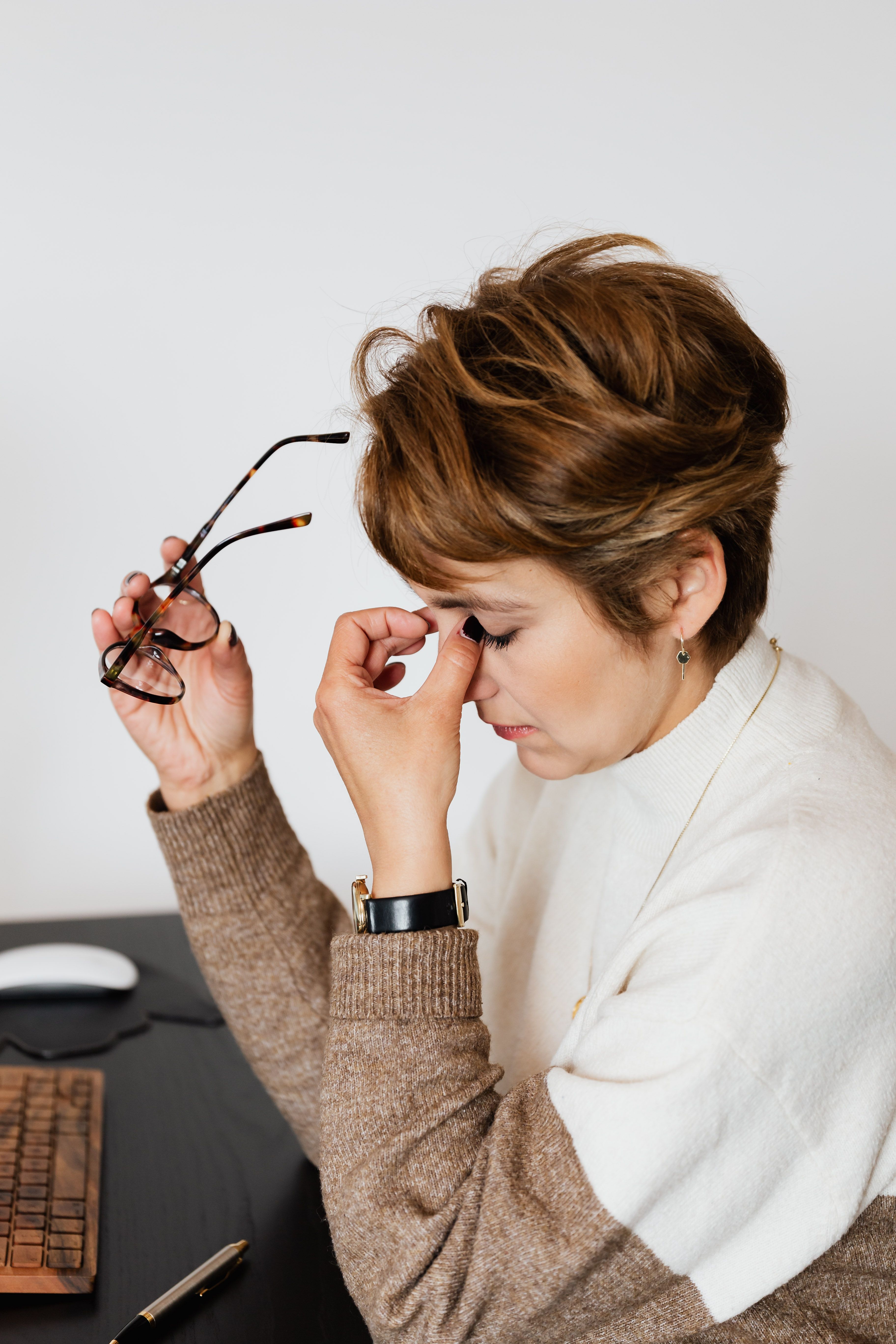
This article is about daytime tiredness in perimenopause — the heavy, hard-to-shift fatigue — and what can sit behind it. The NHS lists hormonal changes, including the menopause, among the common causes of tiredness, alongside poor sleep, stress, depression and some medical conditions. Many women describe this tiredness as different from ordinary tiredness: deeper, more unpredictable and harder to recover from. It does not mean every case of fatigue is “just hormones,” and persistent or severe exhaustion should be medically assessed. But if tiredness appears alongside irregular periods, sleep changes, hot flashes, mood shifts or brain fog, perimenopause may be one part of the picture.
Why Can Perimenopause Make You Feel So Tired?
Perimenopause can make you feel tired because several things may be changing at once: hormones, sleep, temperature regulation, mood and how you cope with stress. The fatigue is often not caused by one thing, but by several small drains on your energy happening together.
There is a kind of tiredness that is easy to explain.
You stayed up too late. You worked too much. You had a sick child at home. You traveled. You pushed yourself too hard.
Then there is another kind of tiredness.
The kind where you slept, but still wake up heavy. The kind where coffee helps for a little while, then leaves you more irritated than awake. The kind where you look at a normal task — replying to an email, making dinner, putting laundry away — and it feels strangely large. The kind where you think, I used to be able to do all this. What happened to me?
Many women meet this kind of fatigue in their 40s and early 50s. And because life is usually busy at the same time, they often blame themselves first.
They think they are lazy. They think they are unmotivated. They think they have lost discipline. They think they need a better routine, a stricter diet, a new supplement, a more heroic personality.
But fatigue during perimenopause is not a character problem. Often, it is a load problem. Your system may be carrying more than it can recover from — and perimenopause can add to that load through broken sleep, night sweats and mood changes.
You may not be doing dramatically more than before. But your body may be recovering less well from the same amount of life.
The Menopause Society notes that multiple menopause symptoms — hot flashes, sleep problems, pain and depression among them — can make women feel fatigued. So when a woman says, “I am tired all the time,” the real question is rarely only: How many hours did you sleep?
The better question is: What is draining your energy? What is interrupting your recovery? What has changed in your hormones, sleep, stress, food, movement or health? And what is your body trying to tell you before it has to shout louder?
What Does Perimenopause Fatigue Feel Like?
Perimenopause fatigue can feel like deep exhaustion, low motivation, heavy limbs, brain fog, emotional flatness, poor concentration, afternoon crashes or feeling tired even after sleep. Some women describe it as “not normal tiredness.”
This matters because “fatigue” is a small word for a large experience. For one woman, it means needing to sit down after basic tasks. For another, it means losing her old mental sharpness. For another, it means waking up tired and waiting all day for bedtime. For another, it means feeling emotionally drained by things she used to handle easily.
It can show up in different ways:
- You wake up unrefreshed.
- You need more recovery after exercise.
- You feel sleepy in the afternoon.
- You lose patience more quickly.
- Your body feels heavy.
- Your motivation disappears.
- You forget simple things.
- You feel emotionally tired, not just physically tired.
- You feel as if your “battery” no longer charges to 100%.
That last image is often the most accurate. It is not that the battery is broken. It is that too many apps are running in the background: hormone shifts, poor sleep, hot flashes, night sweats, skipped meals, stress, caffeine, alcohol, parenting, work, aging parents, relationship tension, too little movement or too much hard training, heavier periods, thyroid changes, low mood, anxiety. And yes, sometimes simply too much life.
The problem is that women are very good at functioning while tired. Too good, sometimes. They continue. They adjust. They lower expectations quietly. They stop doing the small things that used to bring joy because there is no energy left after the necessary things. They become efficient, but less alive. That is why fatigue deserves attention. Not because every tired day is a medical emergency, but because long-term fatigue can quietly shrink your life.
Is Fatigue a Normal Symptom of Perimenopause?
Fatigue can be common during perimenopause, especially when it comes with poor sleep, night sweats, mood changes or heavier stress. But “common” does not mean it should be ignored, especially if it is severe, persistent or new for you.
This is one of the most important distinctions in women’s health: common does not mean irrelevant. Irregular periods are common. Hot flashes are common. Sleep problems are common. Mood shifts are common. But if they affect your life, they matter. A symptom does not need to be rare to deserve care.
The NHS describes sleep problems, mood changes and problems with memory or concentration among perimenopause and menopause symptoms, and notes that these symptoms may feel worse if you have sleep problems and feel very tired.
Fatigue becomes especially relevant when it changes your normal baseline. Ask yourself:
- Is this tiredness new for me?
- Is it getting worse?
- Am I avoiding normal activities because I have no energy?
- Am I relying heavily on caffeine, sugar or alcohol to get through the day?
- Is fatigue affecting my work, relationships or mood?
- Do I also have heavy bleeding, dizziness, palpitations, weight changes, low mood, pain or shortness of breath?
If the answer to any of these is yes, fatigue should not be dismissed as “just age.” Perimenopause may be part of it. But there may also be other contributors worth checking, such as iron deficiency anaemia, thyroid problems, vitamin B12 deficiency, sleep apnea, diabetes, depression, anxiety or medication side effects. A menopause-aware approach does not say, “It is all hormones.” It says, “Hormones may be involved. Let’s look at the whole picture.”
How Do Hormone Changes Affect Energy?
During perimenopause, hormone levels rise and fall unevenly rather than simply declining. Much of the effect on energy is indirect: the same changes can bring hot flashes, night sweats, broken sleep, mood changes and heavier or irregular periods, and each of these can wear you down.
Many women expect perimenopause to be a slow decline. Less estrogen, then menopause, done. But perimenopause often behaves less like a gentle slope and more like a badly organized weather system.
Some months you may feel almost normal. Some months your period arrives early. Some months it disappears. Some months sleep collapses. Some months anxiety appears. Some months you feel puffy, tired, foggy and annoyed by every living creature in your home. The NHS notes that during perimenopause periods may happen more or less often and bleeding may get heavier or lighter, and that symptoms can change over time — hot flushes and night sweats may ease and be replaced by others, such as low mood and anxiety.
Think of it like driving on a smooth road versus driving through traffic with constant braking, accelerating and lane changes. The distance may be the same, but the second journey is more exhausting.
Hormonal change can affect energy through other symptoms:
- Hot flashes can interrupt sleep.
- Night sweats can wake you repeatedly.
- Low mood and anxiety can add mental fatigue.
- Brain fog can make work feel harder.
- Heavier bleeding can lead to low iron in some women.
And when several of these happen together, the tiredness can feel disproportionate. You may think, Why am I this tired? I only woke up twice. But if those wake-ups came after weeks of lighter sleep, higher stress, heavier bleeding, less movement and unstable meals, your body may have been under-recovering for a while. Fatigue is often not one bad night. It is a pattern.
How Much of the Tiredness Comes from Sleep?
Often a good part of it. Sleep problems become more common during the menopause transition, and waking during the night is one of the most common complaints. But daytime fatigue can have other causes too, so sleep is one piece to look at, not the whole answer.
This is the cruel joke of perimenopause fatigue: you can be exhausted all day and still not sleep well at night.
A review of sleep in the menopause transition describes sleep disturbances becoming more common during this stage, with night-time awakenings the most common sleep complaint — and it notes that not every woman with menopause-related sleep problems has hot flashes. The NHS adds that alcohol makes sleep less deep, so you can feel tired the next day even after a full night in bed.
So if you are tired during perimenopause, it can help to notice sleep quality, not only sleep duration. Seven hours of broken sleep may not feel like seven hours. We look at why a full night may not feel restorative — and what can be behind it — in our article on waking up tired even after enough sleep.
Can Night Sweats and Hot Flashes Cause Exhaustion?
Yes, night sweats and hot flashes can contribute to exhaustion, mainly by interrupting sleep. Even brief awakenings can add up when they happen night after night.
Night sweats can be sneaky. You may not fully remember waking each time. You may only notice the result: damp sleepwear, disturbed bedding, a partner complaining about windows, blankets and temperature changes — and a morning body that feels as if it has not been properly switched off.
In one sleep-laboratory study described in the same review, an awakening occurred together with the majority (69%) of hot flashes. The NHS also notes that sleep problems may be worse if you have night sweats.
A night sweat may wake you. You throw off the covers. Then you get cold. Then you pull the covers back. Then your mind wakes up. Then you check the time. Then you calculate how little sleep remains. Then you become annoyed. Then you are fully awake.
By morning, you may not say, “I had five night sweats.” You may say, “I am exhausted.” That exhaustion is real.
Hot flashes can also happen during the day and drain energy in a different way. If they are frequent, embarrassing or physically intense, you may feel more tense in meetings, social situations or public places. If you are always wondering, Will I suddenly sweat? Will my face go red? Will I lose focus? Will I sleep tonight? — that mental background noise has a cost.
If hot flashes or night sweats are strong, frequent or affecting your life, that is a good reason to speak with a healthcare professional about the options. You do not have to wait until you are completely depleted.
Is It Fatigue, Burnout or Perimenopause?
It may be one, two or all three. Fatigue, burnout and perimenopause can overlap because midlife often combines hormonal change with high responsibility, poor recovery and long-term stress. It is often more useful to look at patterns than to choose only one label.
This is where many women get stuck. They ask, Is this perimenopause or burnout? But sometimes the answer is: yes.
Perimenopause can make burnout feel worse. Burnout can make perimenopause symptoms harder to tolerate. Poor sleep can intensify both. Anxiety can ride on top of everything like an unwelcome passenger giving bad directions. Burnout is usually described as exhaustion that comes from long-term stress without enough recovery; it may show up as emotional exhaustion, cynicism, reduced motivation or feeling detached from things that once mattered.
Perimenopause-related fatigue may show up alongside cycle changes, hot flashes, night sweats, sleep disruption, brain fog or mood swings.
But real life does not separate these neatly. A woman in perimenopause may also be working full-time, caring for children, worrying about parents, managing a home, trying to exercise, trying to eat well, trying to be patient, trying to be calm, trying to not scream when someone asks where the clean socks are. At some point, “fatigue” is not surprising.
The question is not only what is happening hormonally. The question is also: What is your life demanding from a body that is already adapting? That is not a small question. And it deserves more than a supplement recommendation. A useful way to begin is to ask:
- Did the fatigue start around cycle changes?
- Is it worse before bleeding?
- Is it worse after night sweats?
- Is it worse after stressful periods?
- Does rest help, or does rest not help?
- Do you feel emotionally detached or only physically tired?
- Are you losing interest in things you normally enjoy?
- Are there physical symptoms that need medical review?
- Are you carrying responsibilities that no human nervous system would find relaxing?
Can Blood Sugar Changes Make Perimenopause Fatigue Worse?
Long gaps between meals, running on coffee and eating mostly quick snacks can leave your energy feeling unsteady during the day. Some women notice they become more sensitive to this in perimenopause.
There is a type of tiredness that does not feel like sleepiness. It feels like your body has suddenly pulled the plug. You were fine at 10 a.m. Then at 11:30, you are shaky, irritated, foggy and searching the kitchen like a woman on a mission.
Or you feel reasonably human after breakfast, then crash in the afternoon and wonder whether it is acceptable to lie down on the office floor for “wellness reasons.” Blood sugar is not the only reason this happens, but meal patterns can be part of it.
A breakfast made mostly of coffee and a small piece of toast may have worked at 32. At 46, it may leave you running on empty by mid-morning. A long gap between lunch and dinner may have been manageable before. Now it may turn you into someone who stares into the fridge with the emotional stability of a tired raccoon. Again: this is not a moral failure.
The NHS suggests eating regular meals and healthy snacks through the day rather than a large meal less often, to help keep your energy up. A helpful approach is not to become obsessive about food. It is to ask:
- Do I feel worse when I skip breakfast?
- Do I feel more tired after sweet foods alone?
- Do I crash after coffee without food?
- Do I feel better when I include protein earlier in the day?
- Do I go too long between meals?
Feeling very tired together with feeling very thirsty, peeing more often than usual and weight loss is different: the NHS lists this pattern as a possible sign of diabetes, which a GP can check with a blood test.
Can Low Iron or Heavy Periods Cause Fatigue in Perimenopause?
Yes, they can. Periods may become heavier during perimenopause, heavy periods are a very common cause of iron deficiency anaemia, and research in midlife women has linked heavy or prolonged bleeding with fatigue. Heavy bleeding should always be discussed with a doctor.
Perimenopause is famous for irregular periods, but irregular does not always mean lighter. Some women skip periods. Some have shorter cycles. Some bleed more heavily than before. Some have periods that arrive like they are making up for lost time and bringing luggage. If your bleeding becomes heavier or more frequent, fatigue may not be only hormonal.
The NHS names heavy periods as a very common cause of iron deficiency anaemia, whose symptoms can include low energy, breathlessness, a racing heartbeat, pale skin and headaches. A 2025 study, based on daily menstrual calendars from more than 2,300 midlife women, found that heavy or prolonged bleeding during the menopause transition was associated with an increased risk of fatigue.
This is one of the reasons fatigue should not be dismissed. If you are in your 40s, suddenly exhausted, and your periods have changed, it is worth asking your doctor whether a blood test is appropriate. Heavy bleeding itself can have different causes, from fibroids to some medicines and, rarely, womb cancer, which is another reason to have it checked.
The NHS suggests seeing a GP if heavy periods are affecting your life, or if you:
- need to change your pad or tampon every 1 to 2 hours,
- have periods lasting more than 7 days,
- pass blood clots larger than about 2.5cm,
- bleed through to your clothes or bedding,
- feel tired or short of breath a lot,
- or bleed between periods or after sex.
The NHS menopause page also advises contacting your GP if your bleeding pattern has changed and you are bleeding more, not less, than before. This is not to frighten you. It is to remind you that “perimenopause” should not become a blanket explanation for everything. Hormonal transition is real. So is proper medical evaluation. Both can be true.
Can Thyroid Problems Look Like Perimenopause Fatigue?
Yes, they can. An underactive thyroid can cause extreme tiredness, feeling cold, weight gain, low mood, difficulty concentrating and irregular or heavy periods, while an overactive thyroid can cause anxiety, sensitivity to heat, difficulty sleeping and a fast or irregular heartbeat.
The thyroid is one of those small glands that behaves like a quiet manager behind the scenes — until something changes, and suddenly the whole office is confused.
The NHS lists feeling extremely tired, feeling cold, putting on weight, low mood, difficulty concentrating and irregular or heavy periods among the symptoms of an underactive thyroid, and nervousness, anxiety, sensitivity to heat, difficulty sleeping and feeling tired all the time among the symptoms of an overactive one. Many of these overlap with perimenopause, which is why it can be difficult to tell what is what from symptoms alone. We explain the overlap in more detail in our article on thyroid problems and menopause symptoms.
Feeling tired? Could be perimenopause. Could be thyroid. Could be low iron. Could be sleep debt. Could be burnout. Could be all of them having a very unhelpful team meeting.
This is why medical checking matters when fatigue is persistent, severe or new. It does not mean you need to panic or demand every possible test. But it is reasonable to ask your doctor whether thyroid function should be checked. A good approach is to bring a clear symptom pattern:
- When did fatigue start?
- How has your cycle changed?
- Are you gaining or losing weight unexpectedly?
- Do you feel unusually cold or hot?
- Has your heart rate changed?
- Are your periods heavier?
- How is your sleep?
- Do you have anxiety, low mood or brain fog?
- Have medications changed?
- Do you have a personal or family history of thyroid disease?
When you can show patterns instead of trying to remember everything in a ten-minute appointment, the conversation becomes more useful. You are not being difficult by asking. You are being precise.
Why Does Stress Feel More Exhausting During Perimenopause?
Poor sleep, hormonal change and midlife responsibilities can leave less room for recovery, so the same stress that once felt manageable may now take longer to bounce back from. Research that followed women through the menopause transition suggests stress and fatigue can interact in less predictable ways during this stage.
This is one of the most frustrating parts of perimenopause. You may look at your life and think, I have handled worse than this. And maybe you have. You have survived newborn sleep deprivation, work deadlines, family problems, financial pressure, heartbreak, school meetings, moving house, illness, and possibly several versions of yourself.
So why does an ordinary stressful week now feel like it has removed your skeleton? Because resilience is not only about personality. The NHS notes that many cases of tiredness are due to stress, not enough sleep, poor diet and other lifestyle factors. A study that analyzed women’s daily symptom diaries across the menopause transition found signs that the usual relationship between stress and fatigue can be disrupted, and its authors called for a holistic approach to supporting women through this stage.
Imagine your phone battery. At 30, a hard week may have drained you, and a couple of decent nights brought you back. At 46, you may start the day already lower, lose energy faster, and recharge less overnight because sleep was broken. After a few weeks, you are not tired from one event. You are tired from incomplete recovery.
This is where many women become angry with themselves. They say, “I should be able to handle this.” But maybe the better sentence is: “My recovery no longer matches my load.” That sentence is not weakness. It is data.
The answer is not always to become tougher. Sometimes the answer is to reduce load, increase recovery, ask for help, change expectations, and stop pretending that your body is still operating under the same conditions as ten years ago. This may mean:
- fewer late-night work sessions,
- more honest conversations at home,
- less alcohol used as a stress-relief tool,
- movement that helps rather than drains,
- stronger boundaries,
- less multitasking,
- more planned recovery after demanding days,
- or talking to your doctor about symptoms that are stealing your sleep.
You do not need to earn rest by collapsing first.
Can Too Much Exercise Make Perimenopause Fatigue Worse?
Regular movement tends to help energy over time, but intensity and recovery matter. If you are already sleeping badly and running on empty, some women find that adding more hard training leaves them more tired, not less.
This is a delicate point, because movement matters so much in midlife. The NHS notes that regular exercise will make you feel less tired in the long run, so you have more energy. If you want the bigger picture on what kinds of movement matter after 40, our guide to exercise during menopause covers it. But more is not always better. Especially when your body is already running on low battery.
Some women respond to perimenopause fatigue by pushing harder. They think, I am gaining weight, I am tired, I need discipline, I need to train harder. So they add intense workouts on top of poor sleep, high stress, skipped meals and night sweats. Then they feel worse. And then they blame themselves. But the problem may not be exercise. The problem may be mismatch.
Signs that your routine may be adding to your fatigue include:
- you feel drained for the rest of the day after workouts,
- you are more irritable after training,
- your sleep gets worse after evening high-intensity sessions,
- you need more caffeine to function,
- you stop recovering between workouts,
- you feel sore for longer than usual,
- or exercise starts feeling like punishment.
This does not mean you should stop moving. It may mean adjusting the mix and leaving room for recovery. A good rule: exercise should challenge you, not crush you. You should feel that your body has worked. You should not feel like you have been emotionally deleted.
If you are very tired, starting small and building up gradually is a reasonable way in. Consistency beats heroics. And honestly, heroics are overrated. They look impressive for two weeks and then usually leave someone eating cereal at 10 p.m. while researching “adrenal fatigue,” which is not where we want this story to go. If aches and stiffness are part of what keeps you from moving, our article on joint pain during menopause may help you make sense of it.
Does Nutrition Really Affect Perimenopause Energy?
What and when you eat can affect how steady your energy feels. Regular meals, enough fluids and not running on caffeine alone are simple places to start. Vitamins, minerals or other supplements are something to discuss with your doctor or pharmacist, not to start on your own.
Food is not magic. But it is fuel. And during perimenopause, many women discover that the body has become less forgiving of random fueling.
The old pattern may have been coffee, something small, too busy for lunch, sweet snack, more coffee, large dinner, wine, poor sleep, repeat. This can work for a while. Women are very skilled at operating on borrowed energy. But borrowed energy charges interest. After 40, the body may ask for more consistent support. Not perfection. Support.
Protein is part of that conversation, especially if you are also trying to keep your strength. A simple plate often includes a source of protein, vegetables or fruit, fiber-rich carbohydrates if they suit you, and some healthy fats. For example:
- Greek yogurt with berries, nuts and seeds.
- Eggs with vegetables and whole-grain toast.
- Lentil soup with olive oil and salad.
- Fish with potatoes and greens.
- Tofu or chicken with vegetables and rice.
- Beans, avocado and vegetables in a wrap.
It does not need to be glamorous. Your body does not care whether lunch is Instagram-worthy.
Fluids matter too: the NHS notes that sometimes you feel tired simply because you are mildly dehydrated.
And then there is the supplement question. If you are wondering about iron, vitamins or any other supplement, talk to your doctor or pharmacist first. If fatigue is strong, it is usually more useful to find out what is behind it — for example with the checks described below — than to buy a shelf full of products. Your body may not need more products. It may need a clearer picture.
Can Caffeine Help or Worsen Fatigue?
Caffeine can make you feel more alert for a while, but it can also disrupt your sleep and leave you more tired the next day. Some women notice that caffeine affects them differently during perimenopause.
Coffee is complicated because many women do not drink it only for energy. They drink it for ritual. For identity. For the small civilized moment before everyone starts needing something. And no article should casually threaten that relationship without showing proper respect.
So let us be clear: caffeine is not automatically bad. The question is whether caffeine is helping you or quietly running the whole show. The NHS notes that caffeine can disrupt your usual sleep rhythms, leading to problems sleeping and then daytime tiredness, and suggests cutting down gradually if you drink a lot.
Some women notice that caffeine now makes them more jittery, anxious or wakeful than before, or that it is fine in the morning but becomes a problem later in the day. Caffeine can also:
- mask tiredness instead of solving the cause,
- replace breakfast or proper meals,
- and keep you pushing when your body is asking for recovery.
A useful experiment is not necessarily quitting coffee. It may be coffee after breakfast instead of before, one cup fewer, an earlier last cup, or noticing whether anxiety or hot flashes seem to follow caffeine. You are not trying to be perfect. You are trying to find out whether caffeine is supporting your energy or borrowing it from tomorrow.
Why Do I Feel Tired but Wired at Night?
Feeling exhausted all day and alert at bedtime is a common, frustrating combination. Stress, late caffeine, alcohol, late screens, a warm bedroom and night sweats can all play a part.
All day, you are tired. Then bedtime arrives, and suddenly your brain behaves like it has been hired as a night security guard. You remember things. You plan things. You worry about things. You replay conversations. Your body is exhausted, but your system will not power down.
A better evening does not need to be a perfect spa-like routine. Someone always needs a charger, a signature or emotional support at exactly the wrong time. The NHS suggests a few basics: try to stick to the same sleep times, relax for a couple of hours before bed, keep your sleeping area not too bright, noisy or warm, avoid eating, caffeine or exercise in the couple of hours before sleep, and avoid screens in the last hour. Even one of these can be a start.
Can Brain Fog and Fatigue Be Connected?
Yes, they often travel together. Poor sleep, low mood, stress and hormonal change can all make thinking feel slower and more effortful, and the NHS lists problems with memory or concentration among perimenopause and menopause symptoms.
Brain fog is not just forgetting why you walked into a room. Although, to be fair, that does happen with impressive theatrical timing. Brain fog can feel like mental heaviness. You read the same sentence three times. You lose words. You forget names. You start one task, then drift into another, then stand in the kitchen holding scissors and wondering what the original mission was.
When fatigue and brain fog happen together, life becomes more effortful. Work takes longer. Planning feels harder. Decision-making becomes tiring. Even conversations can feel like too much input.
This can be frightening for women who have always relied on being sharp, organized and capable. The NHS describes memory and concentration problems among perimenopause and menopause symptoms. That said, cognitive symptoms should be checked by a doctor if they are severe, getting worse quickly, unusual for you, or affecting safety and daily life.
A practical first step is to reduce cognitive load:
- Use lists.
- Keep routines simple.
- Do not rely on memory for everything.
- Batch tasks.
- Put important items in the same place.
- Reduce multitasking.
- Take breaks before your brain forces one.
And please do not interpret every forgotten word as a personal failure. You are not a machine. You are a woman going through a demanding transition, probably also managing a life that was not designed with your nervous system in mind. A little compassion is not indulgence. It is good strategy.
If brain fog is the part that worries you most, our guide to brain fog during menopause looks at what research says about it and what helps.
What Practical Steps Can Help with Perimenopause Fatigue?
Small, realistic changes are a good place to start: protecting your sleep where you can, eating regularly, watching late caffeine and alcohol, moving in a way that leaves you better rather than drained, easing your load, noticing patterns, and getting checked when fatigue is new, severe or persistent.
This is the point where fatigue advice often becomes irritating. Because when a woman says, “I am exhausted,” the last thing she needs is a perfect morning routine that starts at 5:30 a.m. with cold exposure, journaling, breathwork, strength training, a protein smoothie, sunlight, gratitude and a spotless kitchen. Lovely in theory.
In real life, someone cannot find their sports socks, the dishwasher smells strange, one child needs something signed, your phone has 19 unread messages, and you are already tired before breakfast. So let us keep this practical. You do not need to overhaul your entire life. You need to reduce the number of things draining you and increase the number of things that help you recover. Start small.
1. Protect One Part of Your Sleep
You may not be able to fix sleep in one week. But you can choose one point of protection: a cooler bedroom, a few nights with less alcohol, an earlier last coffee, dimmer lights in the evening, or a consistent wake-up time. The aim is not perfect sleep hygiene. The aim is one less interruption. That counts.
2. Eat Before You Become Desperate
If fatigue comes with irritability, shakiness, cravings or afternoon crashes, look at meal timing. Try not to run the first half of the day on coffee and optimism. A simple rhythm may help:
- some protein at breakfast,
- a proper lunch rather than a skipped one,
- a planned snack if dinner is late,
- water before the headache starts,
- and fewer long gaps between meals.
This is not about weight loss. It is about energy stability.
3. Move, but Do Not Punish Yourself
Some days, the right movement is strength training. Some days, it is a brisk walk. Some days, it is Pilates, mobility or stretching. Some days, it is walking around the block and calling that a win because you are not training for the Olympics today. A good question after exercise is:
- Do I feel challenged but better?
- Or do I feel drained, wired, irritable and more tired?
Your answer is useful data.
4. Reduce One Energy Thief
Do not try to fix everything. Choose one energy thief and test it for a week. Maybe it is alcohol, maybe it is late caffeine, maybe it is scrolling in bed, maybe it is skipping lunch, maybe it is saying yes to everything, maybe it is intense exercise at the wrong time, or maybe it is doing emotional labor for everyone in the house while pretending it does not cost anything. Choose one.
The goal is not to become a disciplined wellness machine. The goal is to find out what your body has been quietly asking you to change.
5. Track Fatigue Without Obsessing
Fatigue can feel random when you try to remember it from memory alone. But when you note it down, patterns often appear. For a few weeks, jot down your fatigue level, sleep quality, night sweats or hot flashes, cycle day or bleeding, caffeine, alcohol, movement, stress, meals and mood. You do not need long notes. A quick daily check-in is enough. The point is not to diagnose yourself. The point is to notice what your tired body has been repeating — and to have something concrete to show your doctor.
When Should You See a Doctor About Fatigue?
See a doctor if you have felt tired for a few weeks without knowing why, if tiredness affects your daily life, or if it comes with other symptoms such as weight loss, mood changes, heavy bleeding, breathlessness, palpitations or loud snoring with gasping at night.
Perimenopause can contribute to fatigue. But fatigue should not automatically be filed under “hormones” and ignored. The NHS advises seeing a GP if you have been feeling tired for a few weeks and are not sure why, if tiredness affects your daily life, or if you feel tired and have other symptoms, such as weight loss or mood changes, or have been told you make gasping, snorting or choking noises when you are asleep.
A doctor can help work out whether other factors are involved. The NHS lists, among others:
- iron deficiency anaemia,
- an underactive or overactive thyroid,
- vitamin B12 or folate deficiency anaemia,
- sleep apnea,
- diabetes,
- depression or stress,
- side effects of medicines,
- or other medical causes.
Please also get medical advice if you feel breathless with usual activity, feel faint or dizzy, if your heart races or beats irregularly, if your periods are very heavy or prolonged, if you bleed between periods or after sex, or if your intuition says, “This is not normal for me.” If you feel persistently low or hopeless, talk to your doctor or a mental health professional about the support that is right for you. If you ever feel unsafe or have thoughts of harming yourself, call your local emergency number, or find a free, confidential helpline in your country at findahelpline.com.
Women often wait too long because they are afraid of being dismissed, or because they think they should cope. But you do not need to arrive at the doctor already at breaking point. A useful sentence is: “I may be in perimenopause, but this fatigue is affecting my life. I would like to check whether anything else is contributing.” That is calm. It is specific. It opens the right conversation.
What Should You Ask Your Doctor to Check?
Your doctor will decide which checks fit your symptoms. For tiredness, the NHS says this may include blood tests, for example for anaemia, diabetes or an overactive thyroid. Bringing notes on your periods, sleep, mood and medicines makes the conversation easier.
You do not need to walk into an appointment demanding a giant laboratory menu. But you can walk in prepared. Bring notes on when the fatigue started, whether it is constant or comes in waves, how your periods have changed, whether bleeding is heavier, how you sleep, whether you have hot flashes or night sweats, whether you feel low, anxious or overwhelmed, whether you have palpitations or breathlessness, what medicines or supplements you take, and what helps or worsens the fatigue. This is not over-preparing. This is helping your tired brain.
The NHS notes that a GP may arrange tests such as blood tests to check for anaemia, diabetes or hyperthyroidism, and may refer you to a specialist if the cause is not clear. If your periods have become heavier, The Menopause Society has called for greater clinical awareness of bleeding changes at this life stage, especially when fatigue is also reported. It is reasonable to mention both, and to ask whether your thyroid, blood count and iron, or vitamin B12 should be looked at.
Not every woman needs every test. But every woman deserves to be listened to. And if you feel dismissed, it is reasonable to seek another opinion, ideally from a clinician who understands the menopause transition.
Can Hormone Therapy Help Perimenopause Fatigue?
Hormone therapy is not an energy pill. According to the NHS, HRT can relieve hot flashes, night sweats, and sleep problems and low mood caused by menopause; if those are what drain you, treating them may make a difference to how you feel. Whether it is right for you is a decision to make with your doctor.
If night sweats wake you repeatedly, if hot flashes disrupt your day, or if poor sleep is wearing down your mood and concentration, the symptoms behind the fatigue may be treatable. The NHS describes HRT as effective at relieving most perimenopause and menopause symptoms, including hot flushes, night sweats, sleep problems caused by menopause, and anxiety and low mood caused by menopause, and advises talking to a GP, who will help you decide.
The NICE menopause guideline recommends offering HRT for hot flashes and night sweats, and also lists menopause-specific cognitive behavioural therapy (CBT) as an option for these symptoms and for sleep problems such as night-time waking linked to them. It asks doctors to discuss the benefits and risks of each option with you.
Whether any treatment is appropriate depends on your age, stage, symptoms, medical history, personal risk factors and preferences. A good clinician should help you understand the choices, not push you into one path or dismiss the conversation. You are allowed to ask what options you have, what the benefits and risks are for you personally, and how you will know if it is helping.
How Can Menoup Help with Fatigue Patterns?
Menoup lets you log fatigue alongside sleep, cycle changes, hot flashes, night sweats, mood, stress, food, movement, caffeine and alcohol, so patterns are easier to notice and easier to discuss with your doctor.
Fatigue is one of those symptoms that becomes blurry quickly. When did it start? Was last week worse than this week? Did it happen before your period? Was it connected to poor sleep? Were night sweats worse? Did exercise help or drain you? When you are tired, these details do not stay neatly organized in your head. They float around. They merge. They disappear exactly when a doctor asks, “So how long has this been going on?”
Menoup gives you a place to put the clues, quickly and in real life, not in a perfect health-diary fantasy. Mona, the app’s AI companion, can help you look at those patterns and share general, evidence-informed information — it isn’t a substitute for advice from your doctor. It does not diagnose you. It gives you a map. And a map is better than wandering through symptoms with only guilt and coffee.
Key Takeaways
- Perimenopause can contribute to daytime fatigue, especially when hormone changes, broken sleep, hot flashes, night sweats, low mood, stress and midlife responsibilities overlap.
- Fatigue may feel physical, mental or emotional: heavy tiredness, brain fog, low motivation, afternoon crashes or poor concentration.
- Sleep is often part of it. Night-time waking becomes more common during the menopause transition, and night sweats can break sleep repeatedly.
- Heavy or prolonged bleeding has been linked to fatigue in midlife women, and heavy periods are a very common cause of iron deficiency anaemia. Talk to your doctor about heavier bleeding.
- Not all fatigue is menopause. Thyroid problems, anaemia, vitamin B12 deficiency, sleep apnea, diabetes, depression and medicine side effects can overlap with perimenopause.
- Small changes are a reasonable start: regular meals, enough fluids, less late caffeine and alcohol, movement that leaves you better rather than drained, and more room for recovery.
- See a doctor if you have been tired for a few weeks without knowing why, if it affects daily life, or if it comes with other symptoms.
- You are not lazy. You are not failing. Fatigue is information, and information can be used.
A Gentle Final Note
Fatigue can make you feel as if you are becoming less capable. But tiredness is not a personality flaw. It is not proof that you are lazy. It is not proof that you are weak. It is not proof that the best version of you is gone.
It may be a signal that your body is carrying too much, recovering too little, or adapting to changes you have not yet been given the words for.
Start with one clue:
- One better breakfast.
- One earlier coffee cut-off.
- One walk.
- One night with less alcohol.
- One honest conversation.
- One doctor’s appointment.
- One week of noting how you feel.
You do not have to rebuild your energy in one dramatic transformation. You can begin by listening. And sometimes, that is already a very strong thing to do.
Frequently Asked Questions
Can perimenopause really make you exhausted?
It can contribute. The NHS lists hormonal changes, including the menopause, among the common causes of tiredness, and The Menopause Society notes that symptoms such as hot flashes, sleep problems, pain and depression can make women feel fatigued. Other causes — such as anaemia, thyroid problems or sleep apnea — can look similar, so persistent exhaustion is worth checking with a doctor.
Can heavy periods cause fatigue in perimenopause?
They can. Heavy periods are a very common cause of iron deficiency anaemia, which can cause low energy and breathlessness, and a 2025 study of more than 2,300 midlife women linked heavy or prolonged bleeding during the menopause transition with an increased risk of fatigue. If your periods have become heavier, talk to your doctor.
Should I take iron for perimenopause fatigue?
Talk to your doctor or pharmacist before taking iron or any other supplement. Tiredness has many possible causes, and a blood test can show whether low iron or anaemia is actually part of the picture.
When should I worry about fatigue?
See a doctor if you have felt tired for a few weeks and are not sure why, if tiredness affects your daily life, or if it comes with other symptoms such as weight loss, mood changes, heavy bleeding, breathlessness, palpitations or gasping and loud snoring at night.
Read next:
Last updated: October 10, 2026
Medical Disclaimer: This article is for general information and does not replace medical advice. Fatigue can have many causes besides perimenopause. If your tiredness is new, severe, getting worse or affecting your daily life, please talk to your doctor.
References
- NHS. Tiredness and fatigue. 2023. nhs.uk
- NHS. Self-help tips to fight tiredness. nhs.uk
- NHS. Symptoms of menopause and perimenopause. nhs.uk
- NHS. Iron deficiency anaemia. nhs.uk
- NHS. Heavy periods. nhs.uk
- NHS. Underactive thyroid (hypothyroidism): symptoms. nhs.uk
- NHS. Overactive thyroid (hyperthyroidism): symptoms. nhs.uk
- NHS. Vitamin B12 or folate deficiency anaemia: symptoms. nhs.uk
- NHS. Benefits and risks of hormone replacement therapy (HRT). nhs.uk
- National Institute for Health and Care Excellence (NICE). Menopause: identification and management (NG23). 2015, updated 2024. nice.org.uk
- The Menopause Society. Are You Just Tired or Are You Menopause Tired? Press release. 2025. menopause.org
- Baker FC, Lampio L, Saaresranta T, Polo-Kantola P. Sleep and Sleep Disorders in the Menopausal Transition. Sleep Medicine Clinics. 2018. pmc.ncbi.nlm.nih.gov
- Taylor-Swanson L, Wong AE, Pincus D, Butner JE, Hahn-Holbrook J, Koithan M, Wann K, Woods NF. The Dynamics of Stress and Fatigue across Menopause: Attractors, Coupling and Resilience. Menopause. 2018. pmc.ncbi.nlm.nih.gov